
Every winter before winter break, my director and I brainstorm what new campaigns we should try for the next calendar year. We discuss a variety of things: current events, relevant social issues our researchers are working on, our audiences, what kind of information they might be seeking that we can provide, and what might be a new and unique way to connect them with that information.
Our 2025-6 conversation, in light of new language parameters from federal bodies, focused on how to talk about intersectional issues that connect with poverty, while using that associated vocabulary (e.g. intersectional, racial, social, etc.) less. We were also interested in engaging with our LinkedIn audience more. Between the two, I proposed a short video series.
The plan
The series would help explain how these issues, like housing, education, and public health involve and affect each other. We’d talk to researchers and community leaders, who would offer their insight into the issues at hand and give real life examples viewers might connect with, or see themselves in.
Together with my director we wrote a communications plan for leadership, outlining the goals, audiences, and content plan. We drafted what questions to ask our interviewees, a list of who to invite to talk to us, and a theme to tie it all together.
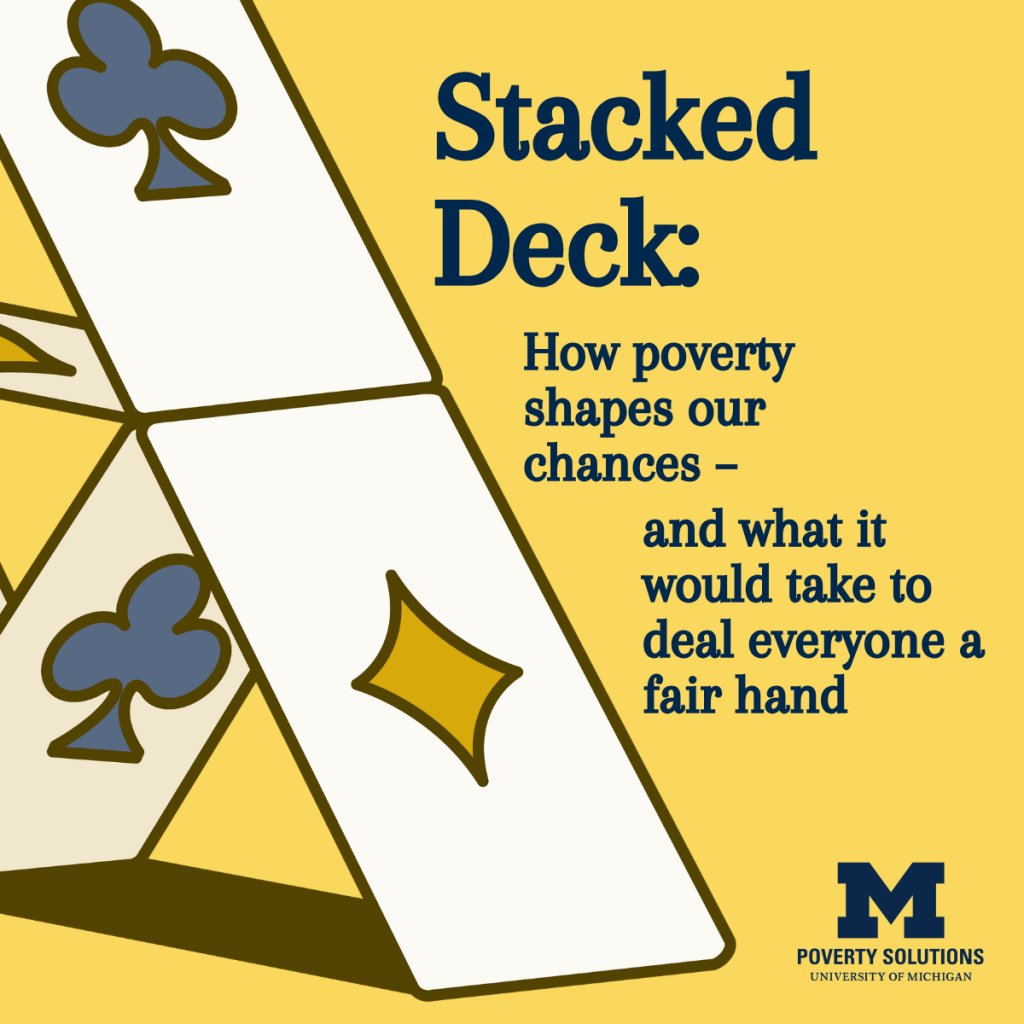
We eventually came up with the deck of cards metaphor for the series:
“In the game of life, everyone is dealt a different hand. It’s very much a game of chance. And for people with low incomes, the deck is often stacked against them.
While some people are dealt strong cards–such as good schools, stable homes, access to health care–those in poverty start with fewer resources and more hurdles. The opportunities dealt to a person by local and federal policy shape people’s ability to improve their financial situations and lives. The deck is stacked.
In this video interview series, I invited people with various types of expertise to share their views on how poverty intersects with social systems and explore ways we can work together differently to create a future where everyone has a fair chance to achieve financial stability and thrive.”
This was the jumping point for the rest of the campaign.
Our strategy then was to try the poll feature on LinkedIn the Monday before a video was released (Fridays), asking a question relevant to the topic discussed in the interview, often involving a statistic. We would then post the answer in the comments, and in a separate post on Wednesday, followed by the video interview on Friday.
Coordination and execution
I designed all of the graphics needed across social media, newsletters, video elements, and our website in Canva. I created and posted our introductory pieces on LinkedIn. I reached out to potential interviewees, scheduled filming or zoom meetings, and recorded them while also asking the questions. I then took those 30-45 minute conversations and cut them down to around 5 minute videos, editing and producing in Adobe Premiere. Those final videos were then uploaded to YouTube, our website, and most importantly, our LinkedIn, where we also boosted them.
The results
See the series webpage with all of the videos
The series was a success!
Overall Performance Metrics on LinkedIn
- 23 posts total
- 4 series intro posts
- 6 polls, 6 answers, 6 videos*. Note: only the video posts were boosted
- Impressions: 222,455 (9362 organic + 190,721 paid)
- Engagements: 1,081 (770 organic + 311 paid)
- Clicks: 696 (552 organic + 131 paid)
- Video views: 164,230 (17,170 organic + 146,320 paid)
- Compared to the same period of the previous year:
- Net audience growth up 62.3%
- Impressions up 126.5%
- Engagements up 95.8%
Original goals: boost engagement, foster conversation, promote systemic/intersectional view of poverty
- Achieved: Engagement up 95.8% from last year
- Commentors asked follow-up questions and added their thoughts to posts


Leave a Reply